
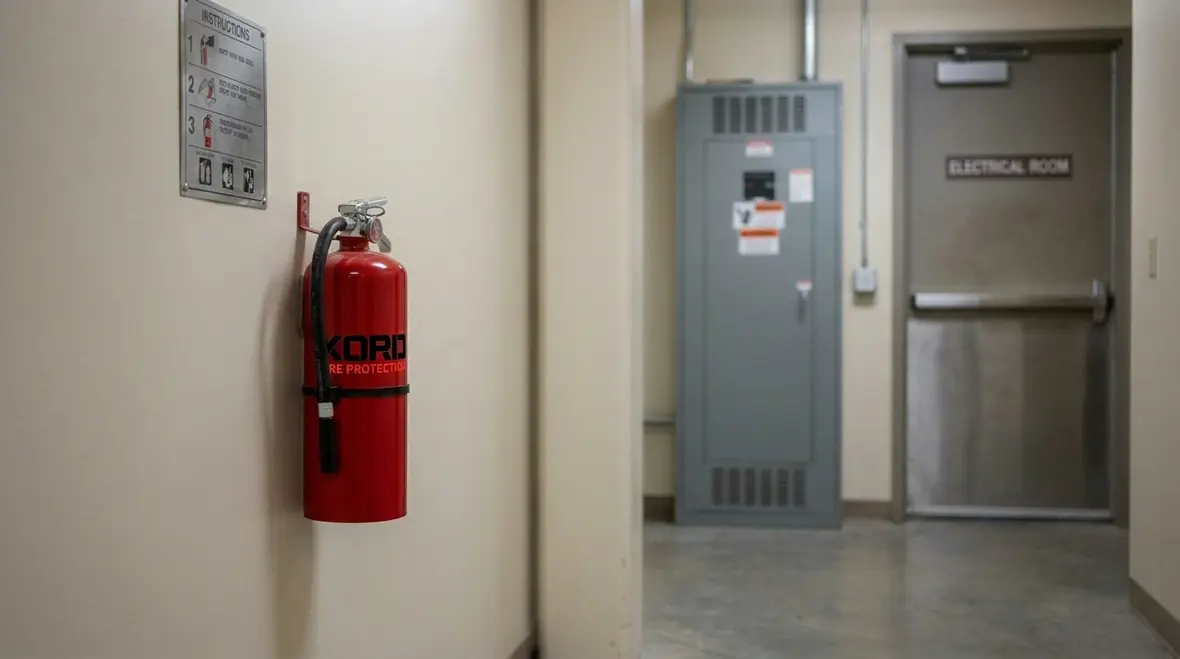
When people think about fire safety, offices and commercial buildings usually come to mind. However, homeowners also have an important role to play—especially when a house includes a home office, rented workspace, domestic staff areas, workshops, storage rooms, or electrical equipment that resembles a small commercial setup.
Modern homes contain many potential ignition sources, including computers, chargers, kitchen appliances, heating equipment, generators, electrical distribution boards, and extension cords. A small electrical fault can develop into a serious fire if it is not detected quickly.
A sensible home fire-safety plan does not need to be complicated. It should combine fire prevention, early detection, safe escape routes, appropriate firefighting equipment, and regular maintenance.
Pakistan’s Building Code of Pakistan – Fire Safety Provisions 2016 emphasizes multiple safeguards rather than relying on a single protection measure. It also addresses means of egress, occupant notification, fire alarm systems, and maintenance of fire-protection systems.
Why Homeowners Should Take Fire Safety Seriously
A house may seem safer than an office or factory because fewer people usually occupy it. But homeowners face a different challenge: many fires happen when people are sleeping or when rooms are unattended.
Common household fire risks include:
- Electrical faults
- Cooking equipment
- Gas appliances
- Portable heaters
- Candles and open flames
- Generators
- Overloaded sockets
- Damaged electrical cables
- Improper fuel storage
- Smoking materials
- Children playing with matches or lighters
The objective of home fire safety is not to eliminate every possible hazard. Instead, it is to reduce preventable risks and ensure that a fire is detected and occupants can escape quickly.
Start With a Home Fire Risk Assessment
The first step is understanding your home’s specific hazards.
Walk through every room and ask:
Where could a fire start?
Look for appliances, electrical equipment, heating sources, cooking equipment, and other potential ignition sources.
What could burn?
Identify furniture, curtains, clothing, paper, cardboard, carpets, plastics, and other combustible materials.
How would everyone escape?
Consider bedrooms, stairways, balconies, corridors, and doors leading outside.
Could everyone hear an alarm?
A detector in one part of the house may not provide sufficient warning everywhere, particularly in larger homes.
Are emergency routes blocked?
Storage should not prevent people from reaching exits.
This simple inspection can reveal problems before an emergency occurs.
Electrical Fire Safety at Home
Electrical equipment is one of the most important areas to inspect.
Modern households may contain televisions, computers, refrigerators, air conditioners, washing machines, chargers, water heaters, pumps, kitchen appliances, and entertainment equipment.
Watch for warning signs such as:
- Burning smells
- Sparking outlets
- Flickering lights
- Warm or discoloured sockets
- Frequently tripping breakers
- Damaged plugs
- Frayed cables
- Loose electrical connections
Do not continue using equipment that shows signs of electrical damage.
Electrical repairs should be carried out by appropriately qualified personnel rather than through temporary or improvised fixes.
Avoid Overloading Sockets
A single socket may be used for multiple devices through an extension board or adapter.
The problem is not simply the number of devices. The total electrical load matters.
High-power appliances such as heaters, irons, kettles, microwave ovens, and water heaters can place significant demands on electrical circuits.
Avoid connecting multiple high-load appliances through unsuitable extension arrangements.
If a socket, plug, or extension board becomes unusually hot, disconnect the equipment safely and have the installation checked.
Kitchen Fire Safety
The kitchen is one of the most important areas in a home fire-safety plan.
Cooking involves heat, electricity, gas, and sometimes flammable oils.
Simple precautions include:
- Never leave cooking unattended.
- Keep towels and cloth away from burners.
- Clean grease deposits regularly.
- Keep children away from cooking equipment.
- Keep appliance cables away from hot surfaces.
- Turn cooking appliances off after use.
- Keep appropriate firefighting equipment accessible.
Never use water on a cooking-oil fire
Water can cause burning oil to splatter and spread the fire.
If a small cooking fire occurs, use only an appropriate method or extinguisher for that type of fire and only when doing so is safe. If the fire is spreading or you cannot control it immediately, evacuate and call emergency services.
Gas Safety
Gas appliances require proper installation, ventilation, and maintenance.
Homeowners should pay attention to:
- Gas cylinders
- Flexible hoses
- Regulators
- Gas heaters
- Stoves
- Water heaters
- Gas connections
If you suspect a gas leak, avoid creating sparks or flames and follow appropriate emergency procedures. Do not attempt risky repairs yourself.
Gas appliances should be maintained according to manufacturer instructions and applicable local requirements.
Heating Equipment and Winter Risks
Heating appliances can become dangerous when placed close to combustible materials.
Keep portable heaters away from:
- Curtains
- Bedding
- Clothing
- Furniture
- Paper
- Carpets where the manufacturer does not permit such placement
Never cover an operating heater unless the manufacturer specifically permits it.
Before using a heater after a long period of storage, inspect it for damage and make sure it is suitable for continued operation.
The Importance of a Fire Alarm System in Pakistan
A fire alarm system in Pakistan can provide an important layer of protection by warning occupants when a fire or smoke condition is detected.
For a home, the appropriate arrangement depends on factors such as:
- Building size
- Number of floors
- Number of occupants
- Sleeping arrangements
- Layout
- Potential fire hazards
- Applicable requirements
Depending on the system, detection may involve smoke detectors, heat detectors, manual alarm points, audible alarms, visual notification, and a central control panel.
Pakistan’s Building Code states that fire alarm systems should be provided where the building’s size, arrangement, or occupancy means that a fire itself would not provide adequate warning to occupants. It also requires fire-protection systems to be designed and installed according to applicable codes and standards.
For a large home, multi-storey residence, or property containing a home office or other higher-risk area, professional assessment can help determine an appropriate detection strategy.
Where Should Smoke Detectors Be Considered?
Detector placement should follow the applicable requirements and the manufacturer’s installation instructions.
In a typical home, homeowners should consider detection coverage around:
- Sleeping areas
- Corridors leading to bedrooms
- Living areas
- Kitchens, with appropriate detector selection and placement
- Electrical or equipment areas
- Other rooms presenting particular fire risks
The goal is to provide sufficient warning without creating unnecessary nuisance alarms.
Smoke detectors should not be covered, painted over, or disconnected because of repeated nuisance alarms. If unwanted alarms occur, the underlying cause and detector suitability should be investigated.
Fire Alarm Maintenance Matters
Installing a detector does not mean the job is finished.
Homeowners should:
- Test alarm devices as recommended.
- Replace batteries where applicable.
- Investigate fault indicators.
- Keep detectors free from excessive dust.
- Avoid painting over detectors.
- Replace damaged equipment.
- Follow manufacturer maintenance instructions.
For larger systems, maintenance should be documented and performed by appropriately qualified personnel.
The Building Code of Pakistan also includes provisions concerning inspection, testing, and maintenance of fire-protection systems.
Fire Extinguishers for Homes
Not every household needs the same firefighting equipment.
The selection should reflect the hazards present.
Potential risks may include:
- Ordinary combustible materials
- Electrical equipment
- Cooking oils
- Flammable liquids
A suitable extinguisher should be:
- Accessible
- Clearly identified
- Properly maintained
- Appropriate for the expected hazard
However, homeowners should never feel obligated to fight a fire.
If flames are growing quickly, smoke is heavy, the escape route is threatened, or you are uncertain about using an extinguisher, leave immediately.
Life safety should come before property protection.
Create a Home Fire Escape Plan
Every household should know what to do if the alarm sounds.
A simple escape plan should identify:
- Primary exit routes
- Alternative exit routes
- A safe outdoor assembly point
- Who will help children
- How elderly occupants will be assisted
- How visitors will be directed outside
- How emergency services will be contacted
The Building Code of Pakistan requires means of egress to be maintained free and unobstructed and states that exit routes should be clearly visible or appropriately indicated.
Keep Exits Clear
A fire can turn ordinary household clutter into a serious obstacle.
Avoid storing items in:
- Stairways
- Corridors
- Doorways
- Exit paths
- Areas immediately outside emergency exits
Do not use emergency exits as general storage spaces.
Everyone in the household should know at least two ways out where the building design permits.
What About Upstairs Bedrooms?
Sleeping occupants may have less time to respond because they may not immediately notice smoke or flames.
This makes early detection particularly important.
If bedrooms are located upstairs, families should understand the available escape routes and consider how occupants would evacuate if the main staircase became unsafe.
Escape plans should be practical rather than theoretical.
For example, a family should know:
- Which bedroom door leads toward safety
- Which staircase is normally used
- What alternative route exists
- Where everyone meets outside
- Who assists children or anyone needing help
Fire Safety for Home Offices
Working from home has become common, and home offices may contain equipment that creates additional electrical demand.
A home office may include:
- Computers
- Monitors
- Printers
- Routers
- Chargers
- UPS systems
- Extension boards
- Batteries
- Networking equipment
Avoid creating a tangled collection of extension cords behind desks.
Keep ventilation openings on computers and other equipment clear.
Do not place electrical equipment directly beside combustible paper piles, curtains, or other materials that could easily ignite.
UPS and Battery Safety
Backup power systems can be useful during power interruptions, but batteries and electrical equipment require proper handling.
Homeowners should follow manufacturer instructions regarding:
- Charging
- Ventilation
- Installation
- Battery replacement
- Electrical connections
- Storage
Damaged or swollen batteries should not be used.
Large backup power systems should be installed and maintained appropriately rather than assembled through improvised connections.
Generator Safety
Generators can help households during power outages, but they introduce additional fire and electrical hazards.
Important precautions include:
- Operate the generator according to manufacturer instructions.
- Keep fuel away from ignition sources.
- Allow hot equipment to cool before refuelling.
- Maintain appropriate ventilation.
- Keep generators away from enclosed living spaces.
- Use suitable electrical connections.
- Never improvise connections to a household electrical system.
Generator exhaust also presents a serious carbon-monoxide hazard, so generator placement requires particular care.
Candles and Open Flames
Candles should never be left unattended.
Keep them away from:
- Curtains
- Bedding
- Paper
- Decorations
- Clothing
- Children
- Pets
Use stable holders and extinguish candles before leaving the room.
If candles are regularly used, consider whether safer alternatives are available for the intended purpose.
Children and Fire Safety
Children should learn basic fire safety without being frightened.
Teach them:
- Never play with matches or lighters.
- Never touch an unattended heater.
- Tell an adult immediately if they see smoke or fire.
- What the alarm sounds like.
- Where the family assembly point is.
- How to leave the building safely.
Matches, lighters, and other ignition sources should be stored where young children cannot access them.
Fire Safety for Elderly or Mobility-Limited Family Members
A home evacuation plan should account for everyone’s needs.
Consider:
- Mobility limitations
- Hearing difficulties
- Visual impairments
- Medical equipment
- Sleeping arrangements
- Assistance requirements
If someone needs assistance to evacuate, decide in advance who will help them.
Do not wait until an emergency to determine responsibilities.
Fire Doors and Fire-Resistant Construction
Some homes contain fire-rated doors, protected stairways, or other passive fire-protection features.
These features are designed to help limit the spread of fire and smoke.
Do not modify fire-rated doors or walls without understanding how the change could affect their performance.
For example, cutting an opening through a fire-rated barrier for cables or pipes can compromise the barrier if it is not properly protected.
The Building Code of Pakistan addresses vertical openings and requires suitable protection to limit the spread of fire, smoke, and fumes between floors where applicable.
Regular Home Fire Safety Inspection
A simple inspection can be performed every few months.
Electrical
- [ ] Check plugs and cables
- [ ] Look for overheating
- [ ] Check extension boards
- [ ] Avoid overloaded outlets
Kitchen
- [ ] Clean grease
- [ ] Inspect appliances
- [ ] Keep combustible materials away
- [ ] Review cooking procedures
Heating
- [ ] Inspect heaters
- [ ] Keep combustible materials away
- [ ] Check connections
Fire Protection
- [ ] Test alarms
- [ ] Check extinguishers
- [ ] Keep exits clear
- [ ] Review escape plans
Family Preparedness
- [ ] Everyone knows the alarm
- [ ] Everyone knows the assembly point
- [ ] Children understand basic safety
- [ ] Assistance arrangements are clear
Common Home Fire Safety Mistakes
Relying on one smoke detector
A large or multi-storey home may require a more carefully planned detection arrangement.
Using damaged electrical equipment
A damaged cable or plug should not be ignored simply because the appliance still works.
Blocking exits with storage
Boxes, furniture, bicycles, or other household items can make evacuation harder.
Leaving cooking unattended
A few minutes of distraction can allow a small cooking problem to become a serious fire.
Ignoring nuisance alarms
Repeated false alarms can result in people disabling detectors. The correct response is to identify the cause and address it.
Treating extinguishers as the main solution
An extinguisher is only one layer of protection. Prevention, detection, evacuation, and emergency response remain essential.
Fire Safety and Pakistan’s Building Framework
The Pakistan Engineering Council lists the Building Code of Pakistan – Fire Safety Provisions 2016 among the country’s building codes and standards.
The code emphasizes multiple safeguards, appropriate means of egress, occupant notification, fire alarm systems where required, and maintenance of fire-protection systems.
The National Disaster Management Authority also publishes fire-safety guidance. Its current guidelines library includes Urban Fire Safety Guidelines, dated March 16, 2026.
Homeowners should remember that specific requirements can vary according to the building’s size, occupancy, design, location, construction, and applicable local requirements. For significant renovations or larger residential properties, professional advice may be appropriate.
A Simple Fire Safety Plan for Homeowners
A practical plan can be summarized in five steps:
1. Prevent
Control electrical, cooking, heating, gas, and open-flame hazards.
2. Detect
Use appropriate smoke and fire detection equipment.
3. Alert
Make sure occupants can hear or otherwise receive the alarm.
4. Escape
Keep exits clear and establish a practical evacuation plan.
5. Maintain
Inspect equipment and correct problems before they become emergencies.
These five steps provide a straightforward foundation for household fire safety.
Final Thoughts
Fire safety is not only a concern for factories, offices, and high-rise buildings. Homeowners also need a practical plan because houses contain many potential sources of ignition and combustible materials.
The most effective approach is layered: prevent fires where possible, detect them early, provide appropriate warning, keep escape routes clear, maintain suitable firefighting equipment, and make sure everyone knows what to do.
A properly selected fire alarm system in Pakistan can be an important part of that strategy, particularly in larger or multi-storey homes where early warning may be critical.
Fire safety does not have to be complicated. A few regular checks and sensible precautions can make a significant difference.
For information about fire protection systems and solutions, visit .
FAQs
1. Do homeowners need a fire alarm system?
The appropriate level of fire detection depends on the home’s size, layout, occupancy, hazards, and applicable requirements. Larger or multi-storey homes may benefit from a more comprehensive system than a small residence.
2. Where should smoke detectors be installed?
Placement should follow applicable requirements and manufacturer instructions. In general, detection should provide appropriate warning around sleeping areas and other areas where a developing fire could threaten occupants.
3. How often should home fire alarms be tested?
Follow the manufacturer’s instructions for testing and maintenance. Battery-powered devices may also require periodic battery replacement. Faults or repeated unwanted alarms should be investigated rather than ignored.
4. What should I do if a fire starts at home?
Alert everyone, leave the building using a safe escape route, and contact emergency services. Only attempt to extinguish a small fire if you have the correct equipment, know how to use it, and can maintain a safe escape route.
5. Does Pakistan have building fire-safety requirements?
Yes. The Building Code of Pakistan – Fire Safety Provisions 2016 includes provisions concerning fire protection, occupant notification, fire alarm systems, means of egress, and other safeguards. The specific requirements applicable to a property depend on its characteristics and the relevant authority.